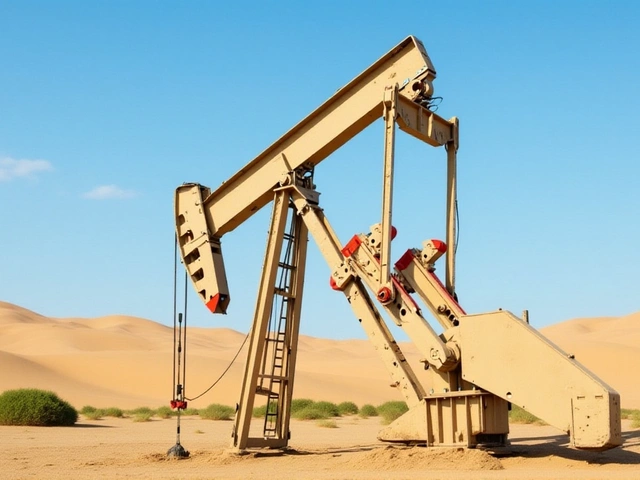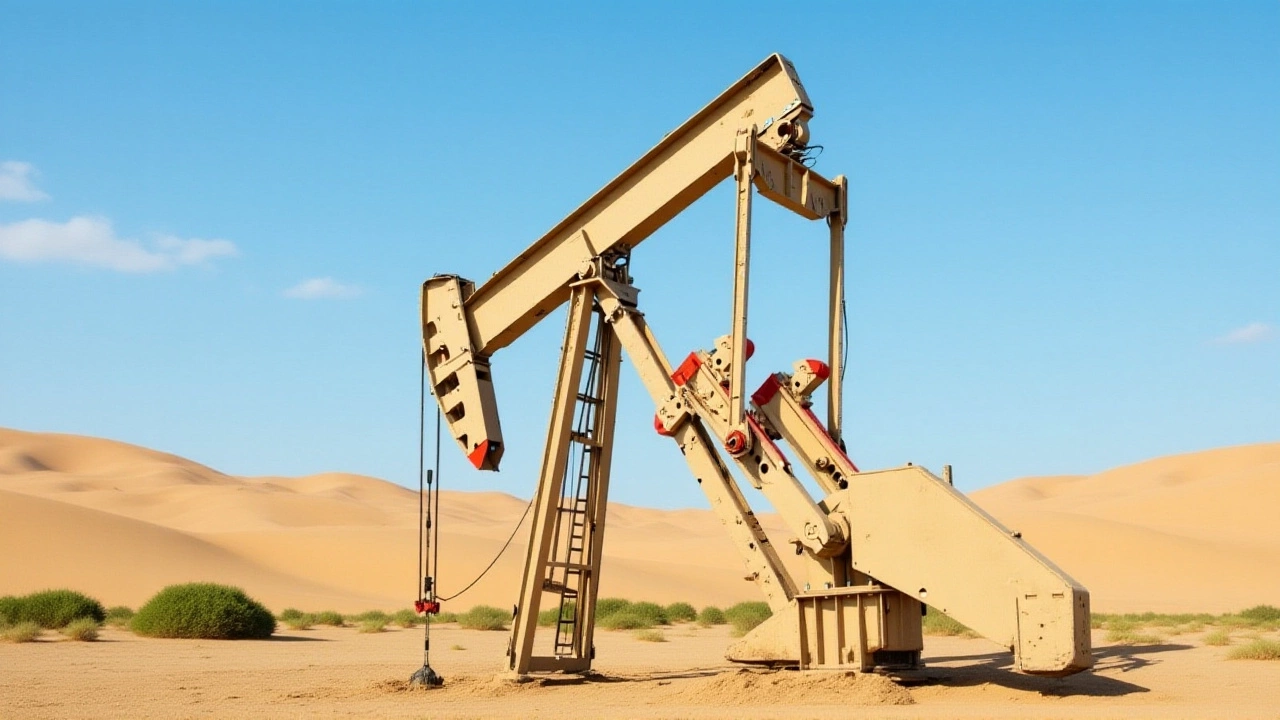
It’s the kind of news that makes you sit up and take notice. Oil India Limited, one of India’s largest public sector oil companies, has struck a significant new pay zone for natural gas in the arid landscapes of western India. This isn’t just another drilling report; it’s a tangible step toward reducing the country’s reliance on imported fuel.
The discovery was made at the Dandewala field, located in the Jaisalmer district of Rajasthan. For the first time, engineers have successfully tapped into the Sanu Formation, triggering a steady flow of natural gas where none existed before. The implications? A potential shift in how India powers its industries and homes.
A Breakthrough in the Desert
Here’s the thing about exploring for energy in Rajasthan: it’s tough work. The terrain is unforgiving, and the geology can be unpredictable. But OIL’s team didn’t just find gas—they found it in a formation that had previously yielded nothing commercially viable. That’s a big deal.
The "pay zone"—the specific geological layer containing extractable resources—is now producing approximately 25,000 standard cubic meters of gas per day. To put that in perspective, that’s enough to power thousands of households or fuel industrial boilers in nearby cities. While this number might seem modest compared to massive global fields, it represents a crucial incremental gain for a nation that imports over 80% of its crude oil and a significant portion of its LNG.
What makes this particularly interesting is the source: the Sanu Formation. Until now, this geological layer hadn’t shown commercial promise for gas production in this region. Breaking that barrier suggests there could be more untapped potential beneath the desert sands.
Government Backing and Strategic Importance
You don’t get high-level praise without hitting a milestone. Hardeep Puri, Union Minister of Petroleum and Natural Gas, publicly congratulated the OIL team for their success. His endorsement signals that this isn’t viewed as a minor operational win, but as part of a broader national strategy.
Why does this matter? Because energy security is no longer just an economic issue—it’s a geopolitical one. With global supply chains fragile and international prices volatile, every barrel of oil or cubic meter of gas produced domestically reduces India’s exposure to external shocks. This discovery aligns directly with the government’s push for "Atmanirbhar Bharat" (Self-Reliant India) in the energy sector.
Puri’s reaction wasn’t just ceremonial. It highlights the pressure on public sector undertakings like OIL to deliver results while private players and foreign giants compete for market share. In a recent statement, industry analysts noted that domestic discoveries are becoming increasingly critical as global gas prices remain elevated.
Beyond the Headlines: What’s Next?
The initial excitement is palpable, but let’s look at the reality. 25,000 cubic meters a day is a start, not a solution. However, experts suggest this is likely just the beginning. The successful extraction from the Sanu Formation opens the door for further exploration in adjacent blocks within the Jaisalmer basin.
If similar pay zones exist nearby, the cumulative output could scale significantly. OIL has indicated that they will continue monitoring the well’s performance and may initiate additional drilling campaigns if the data supports it. The timeline for these next steps remains unclear, but the momentum is clearly building.
This also serves as a counter-narrative to reports suggesting that India’s domestic hydrocarbon reserves are depleting. While older fields like Bombay High face declining production, newer techniques and targeted exploration in unconventional formations are proving that there’s still life left in the ground.
The Bigger Picture
Consider this: India’s energy demand is projected to double by 2047. Every new domestic source counts. The Dandewala discovery might not single-handedly change the trajectory, but it contributes to a diversified energy mix. It reduces the need for immediate LNG imports during peak summer months when electricity demand spikes.
Moreover, local communities in Jaisalmer often benefit from such projects through employment and infrastructure development. While environmental concerns always accompany drilling activities, the shift toward natural gas—a cleaner-burning fossil fuel—offers a transitional advantage over coal-heavy alternatives.
Frequently Asked Questions
How much gas is being produced from the Dandewala field?
The new pay zone in the Sanu Formation is currently producing approximately 25,000 standard cubic meters of natural gas per day. This figure represents the initial commercial flow rate following the successful drilling operation by Oil India Limited.
Why is the Sanu Formation significant?
This is the first time natural gas has been commercially extracted from the Sanu Formation in this region. Previously, this geological layer did not yield viable gas flows, making this a technical breakthrough for exploration in the Jaisalmer basin.
Who is responsible for this discovery?
Oil India Limited (OIL), a Maharatna public sector undertaking under the Ministry of Petroleum and Natural Gas, conducted the exploration and drilling operations that led to this discovery.
Does this reduce India's dependence on imports?
While the current volume is modest, any increase in domestic production helps reduce reliance on imported LNG and crude oil. Over time, if similar discoveries are made, it can contribute meaningfully to India’s energy security goals.
Where exactly is the Dandewala field located?
The Dandewala field is situated in the Jaisalmer district of Rajasthan, a state known for its vast desert landscape and significant hydrocarbon potential in the western part of the country.